
- rolling suds
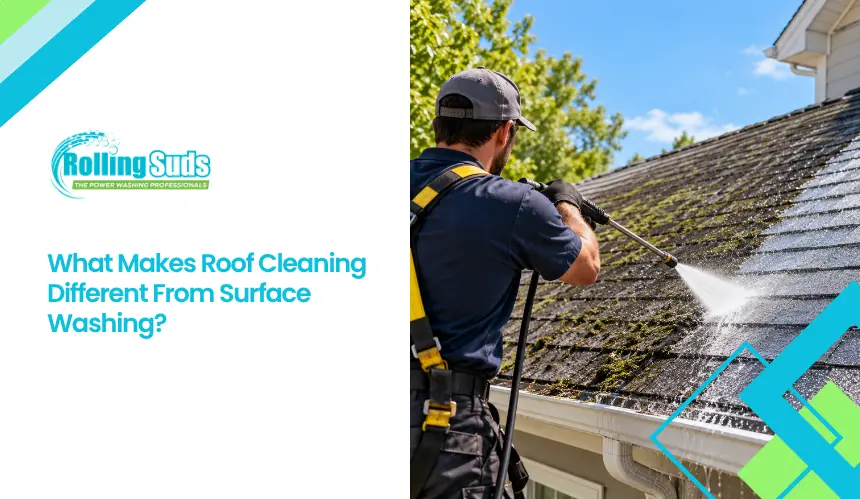
What Makes Roof Cleaning Different From Surface Washing?
Key Takeaways:
|
Roof cleaning and surface washing both remove unwanted buildup, but they are not interchangeable services. A driveway or patio provides a durable, level working area, while a roof contains slopes, overlaps, drainage channels, protective finishes, and materials that can be damaged by excessive water impact.
These differences change how equipment, cleaning solutions, and rinsing methods are used. Professional roof cleaning in Los Angeles prioritizes material protection and controlled runoff, whereas surface washing relies more heavily on mechanical cleaning to remove dirt from durable ground-level areas. Understanding this distinction helps property owners avoid choosing an unsuitable cleaning method.
Roof Cleaning vs Surface Washing
Comparison Point | Roof Cleaning | Surface Washing |
Primary Surfaces | Tiles, asphalt shingles, metal roofing, and coated roof materials | Concrete, pavers, patios, sidewalks, driveways, and other durable surfaces |
Water Impact | Uses Lower, carefully directed water impact | Can use stronger water impact when the material permits |
Cleaning Action | Relies mainly on compatible solutions and sufficient contact time | Relies more heavily on mechanical action and pressurized water |
Equipment | Uses controlled application and rinsing equipment suited to slopes | Often uses rotary surface cleaners for level areas |
Water Direction | Water follows tile courses, shingles, valleys, and drainage paths | Water moves across a flat surface toward nearby drainage points |
Common Contaminants | Algae, moss, lichen, organic debris, dust, and roof stains | Dirt, grime, tire marks, spills, mud, and surface residue |
Material Risks | Excess pressure may crack tiles, loosen granules, lift shingles, or disturb coatings | Incorrect pressure may damage joints, weak concrete, coatings, or nearby materials |
Access Requirements | Requires planning for roof height, slope, condition, and worker movement | Usually performed from a stable, ground-level working position |
Runoff Control | Must account for gutters, downspouts, landscaping, walls, and roof drainage | Runoff is generally easier to observe and direct at ground level |
Roof Materials Require a Different Cleaning Approach
Roofing materials are designed to shed rainwater from a sloped structure, not to tolerate aggressive cleaning from multiple angles. Their profiles, coatings, fastening systems, overlaps, and weathered areas require a more controlled process than durable ground surfaces.
Before cleaning begins, the roof material and its condition must guide the choice of solution, application method, water impact, and worker movement.
Roofing Materials Can Be More Vulnerable
Clay tiles, concrete tiles, asphalt shingles, metal panels, and coated roofing products respond differently to water pressure and cleaning solutions. A method that removes embedded grime from concrete pavement may crack weathered tiles, loosen shingle granules, disturb fasteners, or affect protective finishes.
Roof cleaning must therefore be tailored to the material rather than relying on a single standard pressure setting.
Tile Overlaps Affect Water Direction
Roof tiles and shingles overlap so rainwater travels downward toward gutters, valleys, and drainage points. Cleaning water should follow this intended path because directing a forceful stream upward can push moisture beneath the roofing material.
Professional roof cleaning controls the spray angle and rinse direction to release contamination without working against the roof’s water-shedding design.
Protective Roof Surfaces Must Be Preserved
Some roofing materials contain mineral granules, factory coatings, glazes, sealants, or painted finishes that contribute to their appearance and surface performance. Excessive pressure, abrasive tools, or incompatible chemicals may wear away these protective layers.
A suitable roof-cleaning method loosens contamination while limiting unnecessary contact that could alter the underlying roofing surface.
Existing Damage Changes the Cleaning Method
Cracked tiles, loose shingles, open seams, worn coatings, exposed fasteners, and previous repairs can make individual roof sections more sensitive. A pre-cleaning inspection identifies these vulnerable areas before equipment is positioned or water is applied.
The cleaner can then reduce water impact, adjust access routes, and avoid placing unnecessary stress on damaged materials.
Roof Cleaning Uses Lower Water Impact
Roof cleaning generally relies less on high-pressure water than on surface washing because roofing components can shift, crack, or lose protective material under aggressive impact. Instead of trying to blast contamination away, the process uses a roof-compatible solution to loosen attached growth and residue.
Water is then applied carefully to remove the released material without forcing moisture beneath the roof covering.
High Pressure Can Disturb Roofing Materials
High-pressure water may lift shingles, loosen surface granules, crack weakened tiles, disturb flashing, or penetrate small openings around seams and fasteners. These risks are greater on aged or weathered roofs.
Professional cleaning limits direct water impact and avoids treating the roof like a concrete driveway, where stronger mechanical force can usually be used more safely.
Water Must Follow the Roof’s Drainage Direction
A roof is constructed to move water downward across courses, valleys, gutters, and downspouts. Cleaning water should follow this same route rather than being directed upward beneath tiles, shingles, flashing, or ridge components.
Controlling the rinse direction reduces the possibility of moisture entering protected spaces and helps carry loosened contamination toward the established drainage system.
Cleaning Solutions Perform More of the Work
Roof-compatible cleaning solutions are applied to wet surfaces to soften and release algae, grime, and organic growth from the roofing surface. Sufficient coverage and contact time reduce the need for aggressive water pressure or abrasive scrubbing.
The solution must be selected and applied based on the roofing material, contamination level, surrounding property, and manufacturer-specific cleaning considerations.
Rinsing Is Adjusted to the Roof’s Condition
Rinsing requirements vary according to the roof material, slope, contamination, drainage layout, and existing deterioration. A heavily weathered section may require less water impact than a stable area, while deep tile channels may need more directed flow.
The cleaner adjusts the application instead of using the same water volume and technique across the entire roof.
Surface Washing Relies More on Mechanical Cleaning
Surface washing is commonly used on concrete, pavers, sidewalks, patios, and other durable ground-level materials that can tolerate stronger water impact. The process often combines pressurized water with specialized equipment that moves consistently across the area.
Unlike roof cleaning, it uses greater mechanical action to lift dirt, grime, and surface buildup from a relatively stable working surface.
Flat Surfaces Support Specialized Equipment
A surface cleaner contains rotating spray bars beneath a circular housing and is moved across a level area in overlapping passes. This design distributes water evenly while containing much of the direct spray.
Roofing slopes, raised profiles, overlaps, and fragile components prevent this equipment from operating with the same stability, coverage, and control available on flat pavement.
Durable Materials Tolerate Greater Water Impact
Properly installed concrete and similar hardscape materials generally tolerate more mechanical cleaning force than shingles, tiles, or coated roof products. This durability allows surface washing to more directly target embedded soil, tire marks, tracked-in dirt, and grime.
Even so, water impact must still be adjusted around cracks, loose joints, deteriorated areas, and delicate adjacent materials.
Rotary Cleaning Produces Even Coverage
The rotating spray pattern of surface-washing equipment cleans a consistent width with each pass. When the operator maintains a suitable speed and overlap, this action reduces visible streaks and unevenly cleaned bands across flat areas.
Roof cleaning instead follows individual courses, channels, valleys, and material profiles, so it cannot rely on the same uniform rotary movement.
Surface Runoff Is Easier to Direct
Runoff from a driveway, patio, or sidewalk can often be guided toward an appropriate collection point or drainage route at ground level. Roof runoff travels through slopes, valleys, gutters, and downspouts before reaching surrounding surfaces.
This longer path requires additional planning to control the cleaning solution, loosened contamination, and water around landscaping and building features.
Roof Contamination Requires Targeted Treatment
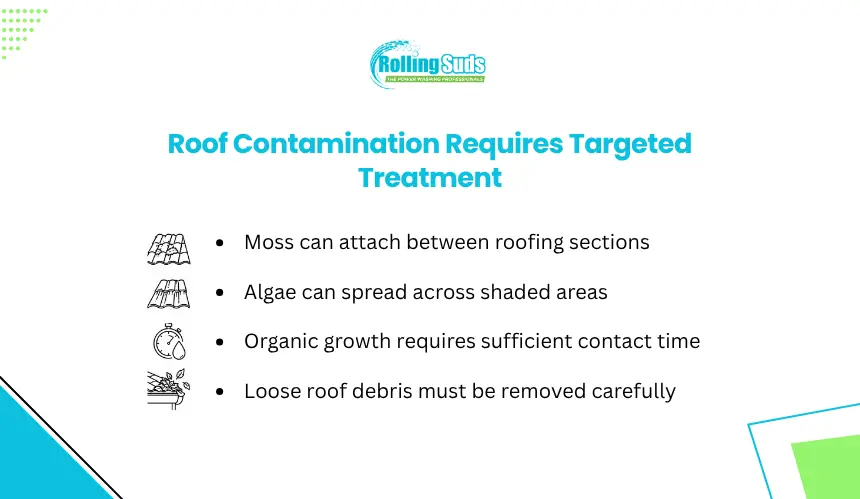
Roof contamination is often biological rather than ordinary surface dirt. Algae, moss, lichen, and decomposing organic debris can attach to textured surfaces, settle in overlaps, and persist in shaded or moisture-retaining areas.
Effective roof cleaning targets these specific contaminants with appropriate solutions and contact time, rather than relying solely on the mechanical action commonly used during surface washing.
Moss Can Attach Between Roofing Sections
Moss can develop on tile edges, shingle tabs, shaded joints, and areas where debris holds moisture. Its growth may extend into small gaps, making aggressive scraping or pressure potentially damaging to the surrounding material.
Roof cleaning loosens moss carefully so it can be removed without forcing tools or water beneath overlapping roofing components.
Algae Can Spread Across Shaded Areas
Algae commonly appear as dark streaks or discolored patches across roof sections that remain damp or receive limited sunlight. Because it can spread over a broad area, isolated spot cleaning may leave connected growth untreated.
Even solution coverage helps address visible contamination while reaching nearby areas where early algae development may be less noticeable.
Organic Growth Requires Sufficient Contact Time
The cleaning solution needs enough contact time to wet and release attached biological material. Rinsing immediately after application may remove the solution before it has effectively loosened the contamination.
During this stage, the cleaner monitors treated areas to prevent premature drying and may adjust the application according to temperature, sunlight, roof material, and contamination density.
Important Information: The Asphalt Roofing Manufacturers Association states that a cleaning solution should remain on asphalt roofing long enough to treat algae and moss before low-pressure rinsing. It also advises preventing the solution from drying completely and protecting nearby landscaping. |
Loose Roof Debris Must Be Removed Carefully
Leaves, twigs, seeds, and decomposing matter can collect in valleys, tile channels, behind roof features, and near drainage openings. Removing this debris exposes the contamination underneath and prevents runoff obstructions.
The material must be cleared without damaging tiles, shingles, flashing, gutters, or other components that may be hidden beneath the accumulation.
Roof Cleaning Requires Additional Control and Planning
Unlike ground-level surface washing, roof cleaning requires planning for elevation, slope, material condition, runoff direction, landscaping, and nearby building features. The process must protect both the roof and the areas below it.
In Los Angeles, roof type, sun exposure, accumulated dust, surrounding vegetation, and periods of limited rainfall can further influence how contamination is treated and rinsed.
Roof Access Must Be Evaluated
The cleaner must determine whether the roof can be accessed safely and which areas can tolerate worker movement. Pitch, tile condition, roof height, nearby power lines, and available equipment placement affect the approach.
Some sections may require alternative access methods to avoid walking across fragile, loose, heavily weathered, or previously repaired roofing materials.
Surrounding Areas Need Protection
Cleaning solution and loosened residue can travel from the roof toward walls, windows, patios, vehicles, outdoor furniture, and landscaping. Before application begins, vulnerable areas should be identified and protected appropriately.
Controlled wetting, temporary coverings, careful equipment placement, and active runoff monitoring help limit unwanted contact with surfaces below the roofline.
Solution Runoff Must Be Managed
Roof-cleaning runoff follows valleys, gutters, downspouts, and natural low points before reaching the ground. The cleaner must anticipate this route and prevent concentrated solution from collecting around plants, entrances, painted surfaces, or drainage-sensitive areas.
Surface washing typically creates runoff closer to the work area, making its movement more direct and easier to observe.
Los Angeles Roof Conditions Affect the Process
Los Angeles roofs may accumulate airborne dust, organic debris, algae, and localized growth depending on shade, coastal influence, nearby trees, and drainage conditions. Strong sunlight can also cause the cleaning solution to dry more quickly.
These factors affect application timing, contact time, rinsing order, and the amount of protection required around the property.
Ready to remove algae, moss, debris, and grime without treating the roof like ordinary pavement? Pressure washing in Los Angeles, powered by Rolling Suds of Beverly Hills, provides controlled roof cleaning for Los Angeles properties using methods suited to roofing materials, slopes, and drainage paths.
Frequently Asked Questions
Is roof cleaning the same as pressure washing?
No. Roof cleaning typically uses low-impact, roof-compatible solutions, controlled application, and directed rinsing to remove contamination without disturbing roofing components. Pressure washing relies more heavily on mechanical force and is generally better suited to durable surfaces. The appropriate method depends on the roof material, condition, and type of buildup present.
Why is lower pressure used on roofs?
Lower pressure helps protect tiles, shingles, coatings, flashing, seams, and fasteners from unnecessary impact. Forceful water may crack weakened materials, loosen granules, shift components, or enter beneath overlaps. Roof cleaning allows the solution and contact time to loosen contamination, so rinsing can remove it without relying on high pressure.
Can surface-washing equipment be used on a roof?
Rotary surface cleaners are designed to move across stable, relatively level materials such as concrete patios, sidewalks, and driveways. Roof slopes, raised tile profiles, overlapping sections, fragile materials, and drainage channels prevent this equipment from operating safely or evenly. Roofs require application and rinsing tools that provide greater directional control.
How are roof algae and moss removed?
A compatible cleaning solution is applied to wet and loosen the algae or moss attached to the roofing surface. After sufficient contact time, the contamination is removed using a method appropriate for the roof material and condition. Water direction, solution coverage, surrounding landscaping, and runoff routes must remain controlled throughout the process.
Does every roof require the same cleaning method?
No. The cleaning method varies depending on whether the roof is tiled, shingled, metal, coated, or made of another material. Age, slope, existing damage, contamination type, drainage, and manufacturer guidance also affect the process. A professional assessment helps determine the appropriate solution strength, contact time, access method, and rinsing approach.