
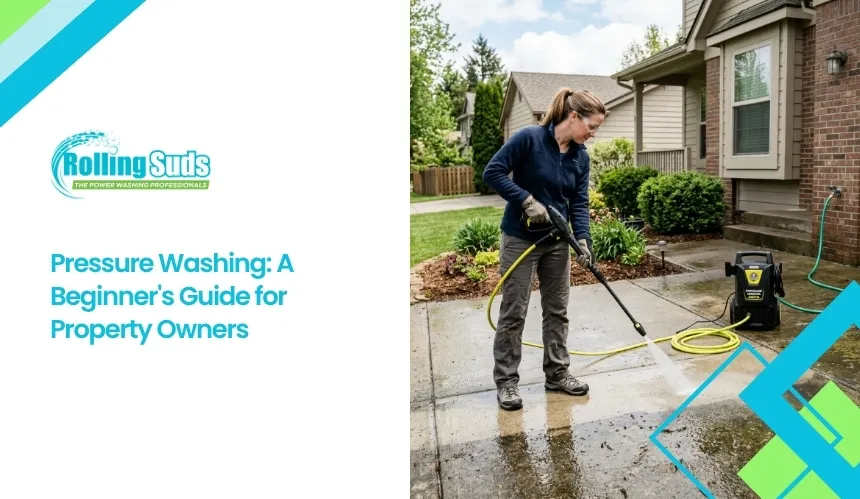
- rolling suds
Pressure Washing: A Beginner's Guide for Property Owners
A Quick Answer: Pressure washing for beginners involves using high-pressure water, measured in PSI and GPM, to safely and efficiently remove dirt, mold, and buildup from outdoor surfaces. The key is balancing pressure, distance, and technique based on the surface being cleaned. At a glance, beginners should focus on:
A 2025 home maintenance study found that properly performed structured pressure washing can extend surface longevity by up to 30%, especially for materials exposed to mold and environmental buildup. Another industry report highlights that improper pressure settings are one of the leading causes of surface damage, reinforcing the importance of technique over raw power. |
Pressure washing often seems straightforward: point, spray, and rinse. But for beginners, the difference between effective cleaning and costly surface damage comes down to understanding how pressure, technique, and surface type interact. Many property owners assume higher pressure yields better results, only to encounter streaking, etched concrete, or damaged siding due to improper handling.
A 2025 property maintenance report found that over 60% of first-time users apply incorrect pressure settings for the surface they are cleaning, leading to avoidable wear and repair costs. Another study noted that organic growth, such as mold and algae, can begin degrading exterior surfaces within months if not properly removed, making regular, proper cleaning essential rather than optional.
Pressure washing is not just about removing visible dirt. It is a controlled process that combines water force, cleaning agents, and application technique to restore surfaces without compromising their integrity. From driveways and patios to siding and fences, each material responds differently to pressure and requires a specific approach.
This beginner’s guide breaks down how pressure washing works, what equipment is needed, and how to apply the right techniques safely. By understanding the fundamentals, property owners can clean more efficiently, protect their surfaces, and avoid the common mistakes that reduce both results and lifespan.
What Is Pressure Washing and How Does It Work?
Pressure washing is a controlled cleaning method that uses high-velocity water to break the bond between contaminants and surfaces. It is not just about force, but about how pressure, water flow, and angle interact to lift dirt, mold, algae, and debris without damaging the material underneath.
Understanding PSI and GPM in simple terms
PSI (pounds per square inch) measures the intensity of the water pressure, while GPM (gallons per minute) determines how much water flows through the system. Together, they define cleaning power. Higher PSI increases impact force, while higher GPM improves rinsing efficiency and speeds up cleaning.
For beginners, balancing these two factors is critical. Excessive PSI can damage surfaces, while insufficient flow may leave residue behind.
How pressure removes dirt, mold, and buildup
Contaminants like dirt, grease, and biological growth adhere to surfaces through weak bonds. Pressurized water disrupts these bonds, lifting particles away from the surface. When combined with proper angles and movement, this process ensures contaminants are removed rather than pushed deeper into porous materials.
A 2025 cleaning efficiency study showed that combining correct pressure with a proper spray angle improves removal rates by more than 35% compared to random spray patterns.
Difference between pressure washing and soft washing
Not all surfaces can handle high pressure. Soft washing uses lower pressure, combined with specialized cleaning solutions, to safely break down organic growth. This method is commonly used for roofs, painted surfaces, and delicate materials where high pressure could cause damage.
Understanding when to use pressure washing versus soft washing allows property owners to clean effectively while preserving the integrity of different surfaces.
What Equipment Do Beginners Need to Get Started?
Getting started with pressure washing does not require a complex setup, but choosing the right foundational equipment is essential for safe and effective cleaning. The goal is to build a setup that balances power, control, and adaptability across different outdoor surfaces.
Types of pressure washers (electric vs gas)
Pressure washers are generally categorized as electric or gas-powered, each suited to different levels of use. Electric models are ideal for beginners handling light-to-moderate tasks such as patios, vehicles, and siding due to their lower pressure output and easier control. Gas-powered units deliver higher PSI and are better suited for heavy-duty cleaning, such as driveways and large exterior areas, but they require more experience to operate safely.
A 2025 consumer equipment report noted that most first-time users achieve better results with electric units due to their consistent pressure delivery and reduced risk of surface damage.
Essential accessories for basic cleaning
Basic accessories determine how effectively the pressure washer performs across tasks. Key tools include spray nozzles for pressure control, hoses for reach, and surface cleaners for even coverage on flat areas. These accessories allow users to adapt their cleaning approach without changing the core machine.
Using the right attachment for the job improves efficiency and reduces cleaning time, especially when transitioning between surfaces like concrete and siding.
Detergents and cleaning solutions explained
Water pressure alone is not always sufficient for removing grease, mold, or embedded dirt. Cleaning solutions help break down these substances, making them easier to rinse away. Detergents are designed to work with pressure washers, enhancing cleaning effectiveness without requiring excessive force.
Proper selection and dilution of cleaning agents ensure surfaces are cleaned thoroughly while minimizing residue and preventing material degradation.
How to Use a Pressure Washer Safely and Effectively
Using a pressure washer correctly involves preparation, control, and consistent movement. Beginners often focus on power, but safe and effective cleaning depends more on technique and setup than raw pressure output.
Preparing the area before cleaning
Preparation ensures efficient cleaning and prevents unnecessary damage to surrounding areas. Before starting, it is important to clear obstacles and protect sensitive elements.
- Remove loose debris such as leaves, dust, and dirt
- Cover electrical outlets, light fixtures, and delicate surfaces
- Close windows and doors to prevent water intrusion
- Pre-rinse surfaces to loosen top-layer contaminants
A 2025 home care study found that proper pre-cleaning preparation can reduce overall cleaning time by nearly 25%, while also improving final results.
Correct nozzle selection and spray distance
Nozzle choice directly controls how pressure is applied to a surface. Beginners should always start with a wider spray angle and adjust gradually based on results.
- Use wide-angle nozzles for delicate surfaces like siding and wood
- Use narrower angles for tough stains on concrete or stone
- Maintain a consistent distance to prevent uneven cleaning
- Test spray settings on a small, hidden area first
Maintaining the correct distance is critical. Holding the spray too close can concentrate pressure and damage the surface, while standing too far reduces cleaning effectiveness.
Proper cleaning technique to avoid streaks and damage
Technique determines whether surfaces are cleaned evenly or left with visible marks. Controlled, consistent motion ensures uniform results.
- Use smooth, overlapping strokes to avoid streaking
- Keep the spray moving instead of focusing on one spot
- Work from top to bottom on vertical surfaces to prevent runoff marks
- Avoid spraying directly into seams, cracks, or joints
Consistent technique not only improves visual results but also prevents structural wear caused by concentrated pressure in a single area.
Which Surfaces Can Be Pressure Washed and Which Require Caution?
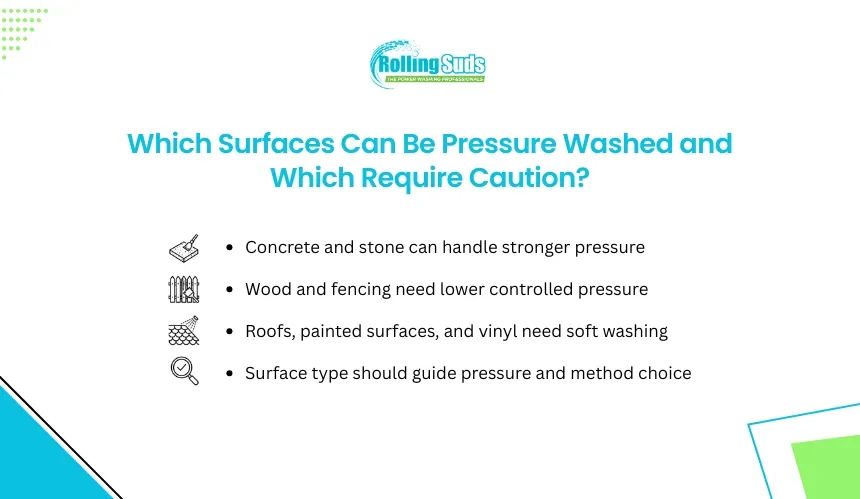
Not all surfaces respond the same way to pressure washing. Understanding material strength, surface coating, and porosity is essential for avoiding damage while achieving effective cleaning results. Beginners should approach each surface based on its tolerance to pressure and moisture exposure.
Safe surfaces like concrete and stone
Hard, non-porous surfaces can withstand higher pressure and are ideal for standard pressure-washing techniques. These materials typically accumulate dirt, oil stains, and environmental buildup that require a stronger cleaning force.
- Driveways, sidewalks, and patios handle higher PSI effectively
- Stone surfaces respond well to consistent, even pressure application
- Surface cleaners help maintain uniform results without streaking
A structured approach ensures deep cleaning without leaving uneven marks or surface etching.
Moderate surfaces like wood and fencing
Wood and similar materials require controlled pressure due to their softer structure and susceptibility to damage. Improper technique can lead to splintering, discoloration, or surface weakening.
- Use lower pressure settings and wider spray angles
- Maintain a safe distance to avoid cutting into the material
- Follow the natural grain direction for more consistent results
Careful handling preserves the integrity of the surface while still effectively removing dirt and buildup.
Delicate areas requiring soft washing methods
Certain surfaces cannot tolerate high pressure and require alternative cleaning approaches. Soft washing combines low pressure with cleaning solutions to safely remove organic growth and stains.
- Roof shingles, painted surfaces, and vinyl siding
- Areas affected by mold, mildew, or algae
- Surfaces with protective coatings or finishes
Using the correct method for delicate materials prevents damage while ensuring thorough cleaning, making soft washing a critical technique for beginners to understand.
Common Beginner Mistakes and How to Avoid Them
Mistakes in pressure washing are usually not due to lack of effort, but due to a misunderstanding of how pressure interacts with different surfaces. Beginners often rely on trial and error, which can lead to inefficient cleaning or permanent surface damage. Recognizing these common issues early helps maintain both results and property condition.
Using too much pressure on sensitive surfaces
Applying excessive PSI is one of the most frequent errors. While higher pressure may seem more effective, it can strip paint, damage wood fibers, and even etch concrete. Surfaces like siding, decks, and painted finishes require controlled pressure to prevent structural or visual damage.
Holding the spray too close or too long
Maintaining a proper distance is essential for even cleaning. Holding the nozzle too close concentrates the force in a small area, increasing the risk of surface wear. Similarly, focusing on one spot for too long can create visible marks or weaken the material, especially on softer surfaces.
Ignoring proper detergent usage
Many beginners either skip detergents entirely or use them incorrectly. Cleaning solutions are designed to break down grease, mold, and embedded dirt, reducing the need for excessive pressure. Without proper application and dwell time, contaminants may not be fully removed, leading to inconsistent results.
When Should Property Owners Consider Professional Pressure Washing?
While property owners can handle pressure washing at a basic level, certain situations require professional expertise. Larger surfaces, complex materials, and persistent contamination often require advanced equipment and specialized techniques beyond beginner-level capabilities.
Large-scale cleaning or multi-surface properties
Properties with extensive exterior areas or multiple surface types require coordinated cleaning strategies. Professionals are equipped to handle a range of materials efficiently while maintaining consistent results throughout the property.
Stubborn stains and biological growth
Deep stains, oil buildup, and biological growth such as mold and algae can penetrate surfaces over time. Removing these contaminants often requires a combination of specialized detergents and controlled pressure, which professionals are trained to apply.
Situations requiring specialized equipment
Certain cleaning tasks involve elevated surfaces, delicate materials, or restricted access areas. Professional services use advanced tools such as high-reach systems and surface-specific attachments to address these challenges safely and effectively.
Rolling Suds provides professional exterior cleaning services designed to deliver consistent, surface-safe results for both residential and commercial properties. Their approach focuses on using calibrated pressure, appropriate detergents, and surface-specific techniques to prevent damage while improving overall cleaning performance. Customers can expect efficient scheduling, reliable service, and tailored solutions based on property conditions.
Frequently Asked Questions
What is the best pressure washer for beginners?
Electric pressure washers are generally recommended for beginners because they offer controlled pressure output, are easier to operate, and reduce the risk of surface damage. They are suitable for tasks like cleaning patios, vehicles, and siding without overwhelming the user with excessive power.
How often should property owners pressure wash their home?
Most properties benefit from pressure washing once or twice a year, depending on environmental exposure. Areas with higher humidity or pollution may require more frequent cleaning to prevent the buildup of mold, algae, and dirt that can affect surface condition.
Can pressure washing damage surfaces if done incorrectly?
Improper pressure settings, incorrect nozzle selection, or poor technique can cause surface damage such as etching, paint removal, or material weakening. Understanding surface requirements and maintaining proper distance helps prevent these issues.
Do I need detergents for pressure washing?
Detergents are often necessary for breaking down grease, mold, and embedded dirt that water alone cannot remove. Using the correct cleaning solution improves effectiveness and reduces the need for high pressure.
Is pressure washing safe for all outdoor surfaces?
Not all surfaces can handle high pressure. While concrete and stone are generally safe, materials like wood, siding, and roofing require lower-pressure or soft-washing methods to avoid damage.