
- rolling suds
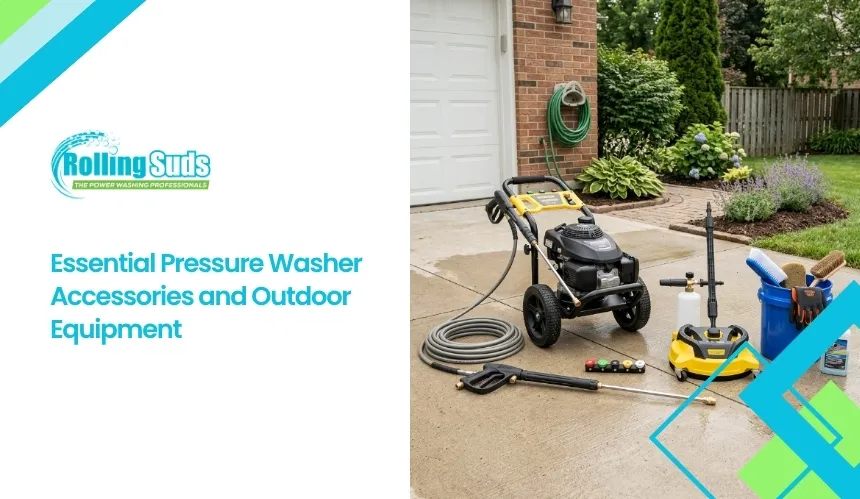
Essential Pressure Washer Accessories and Outdoor Equipment
|
A Quick Answer: Essential pressure washer accessories and outdoor equipment directly determine cleaning efficiency, coverage, and surface safety. Key tools include spray nozzles for pressure control, surface cleaners for uniform results, extension wands for hard-to-reach areas, and foam cannons for effective detergent application. Supporting equipment such as high-quality hoses, water filters, and safety gear further ensures consistent performance, reduces equipment strain, and improves long-term usability across a range of outdoor cleaning tasks. |
Outdoor cleaning often looks simple on the surface, but inconsistent results, surface damage, and wasted time usually come down to one overlooked factor: using the wrong tools. Many users rely on a basic setup and expect professional-level outcomes, only to end up with uneven cleaning, stubborn stains, or inefficient water usage. This is where choosing the right essential pressure washer accessories and outdoor equipment makes the difference between surface-level cleaning and deep, consistent results.
A 2025 industry analysis found that using task-specific pressure washer attachments can improve cleaning efficiency by up to 40% compared to standard spray setups. Another report highlighted that improper nozzle selection alone accounts for a significant share of surface damage cases, especially on wood, siding, and painted surfaces. These insights reinforce a simple reality: performance is not just about PSI; it is about how effectively that pressure is controlled and applied.
From driveways and patios to siding and vehicles, each surface requires a different approach. Accessories like surface cleaners, foam cannons, and extension wands are not optional add-ons; they are functional upgrades that optimize water flow, coverage, and precision. Understanding how these tools work together allows users to clean faster, safer, and with far more consistent results.
The following sections break down the most important accessories, their impact on performance, and how to select the right setup for specific outdoor cleaning tasks.
What Are the Must-Have Pressure Washer Accessories for Effective Cleaning?
Cleaning efficiency is not defined solely by pressure. It depends on how well water flow, spray control, and surface coverage are managed through the right tools. The most effective setups rely on a combination of accessories that address power delivery, reach, and precision without overloading surfaces.
Core attachments that improve cleaning power
Nozzles are the primary control mechanism for pressure distribution. Different spray angles determine how concentrated or dispersed the water stream is, directly affecting stain removal and surface safety. Turbo nozzles, for example, rotate the spray pattern to increase impact force without increasing overall pressure, making them effective for stubborn grime.
Accessories that expand reach and coverage
Extension wands and high-pressure hoses allow users to clean elevated or distant surfaces without frequently repositioning the equipment. This not only improves efficiency but also ensures more consistent cleaning patterns across large areas such as siding or fencing.
Tools that enhance precision and control
Quick-connect fittings and adjustable spray guns provide flexibility during operation. They allow users to switch between tasks without interrupting workflow, maintaining consistent output while adapting to different cleaning requirements.
How Do Different Pressure Washer Attachments Improve Cleaning Performance?
Each attachment plays a specific role in controlling how water interacts with a surface. The right combination improves speed, reduces effort, and prevents damage by aligning pressure output with surface requirements.
Nozzle types and spray patterns explained
Narrow spray angles concentrate force for deep cleaning, while wider angles distribute pressure more gently. Selecting the correct pattern ensures that contaminants are removed efficiently without stripping paint or damaging materials.
Surface cleaners vs standard spray cleaning
Surface cleaners use rotating jets within a housing to deliver even coverage across flat areas. Unlike standard spray methods, they eliminate streaking and significantly reduce cleaning time, especially on driveways and patios.
Foam cannons and detergent application efficiency
Foam cannons apply cleaning agents in a thick, uniform layer that adheres to surfaces. This improves chemical dwell time, allowing detergents to break down dirt more effectively before rinsing, which reduces the need for excessive pressure.
Which Outdoor Equipment Works Best Alongside Pressure Washers?
Pressure washer performance improves when supported by equipment that stabilizes water quality, enhances safety, and expands operational capability. These tools ensure consistent output across different conditions.
Water supply and filtration systems
Clean water input is critical for maintaining internal components and preventing clogs. Filtration systems remove debris and minerals that can reduce efficiency or damage the pump over time.
Extension tools for elevated surfaces
Telescoping wands and support poles allow safe access to roofs, gutters, and upper walls. These tools reduce the need for ladders while maintaining controlled pressure at height.
Safety gear and protective equipment
Gloves, eye protection, and non-slip footwear protect users from high-pressure spray and debris. Controlled handling reduces the risk of injury while maintaining stable operation during extended use.
How to Choose the Right Accessories Based on Cleaning Tasks?
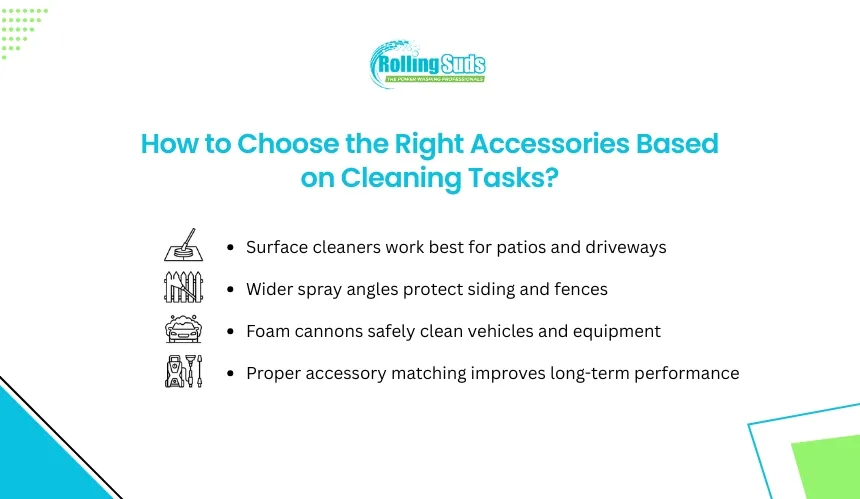
Select accessories based on surface type, contamination level, and required precision. A task-specific approach ensures optimal results without unnecessary wear on equipment or materials.
Driveways, patios, and concrete surfaces
Flat surfaces benefit from high-coverage tools that maintain uniform pressure distribution. Surface cleaners combined with medium-angle nozzles provide efficient cleaning while preventing uneven marks.
Siding, fences, and delicate materials
Lower pressure settings and wider spray angles are essential for protecting softer materials. Extension tools help maintain distance, ensuring controlled cleaning without direct high-impact force.
Vehicles and equipment cleaning
Foam cannons and soft spray nozzles are preferred for vehicles. These tools allow detergents to lift dirt without scratching surfaces, preserving finishes while achieving thorough cleaning.
Common Mistakes to Avoid When Using Pressure Washer Accessories
Incorrect usage often leads to reduced efficiency or surface damage. Understanding common mistakes helps maintain both performance and safety.
Using incorrect PSI or nozzle type
Applying excessive pressure or using a narrow spray on delicate surfaces can cause irreversible damage. Matching pressure output with surface tolerance is essential.
Overusing detergents or wrong chemicals
Excessive or incompatible cleaning agents can leave residues or degrade materials. Proper dilution and correct product selection ensure effective and safe cleaning.
Ignoring compatibility and fittings
Mismatched connectors or accessories can reduce performance or cause leaks. Ensuring compatibility between components maintains consistent pressure and flow.
What Factors Determine Long-Term Efficiency and Equipment Lifespan?
Sustained performance depends on how well equipment is maintained and how effectively accessories are managed over time. Proper care reduces operational costs and extends usability.
Maintenance of accessories and tools
Regular inspection and cleaning of nozzles, hoses, and filters prevent blockages and wear. Keeping components in optimal condition ensures consistent pressure output.
Storage and durability considerations
Storing equipment in controlled environments prevents damage from moisture, temperature changes, and debris. Proper storage preserves material integrity and functionality.
Cost vs performance trade-offs
Investing in durable, high-quality accessories reduces replacement frequency and improves overall efficiency. Long-term value is achieved by balancing upfront cost with sustained performance benefits.
Key Takeaways
- Cleaning performance depends on accessories, not just pressure output
- Nozzles and spray patterns control both efficiency and surface safety
- Surface cleaners significantly improve speed and consistency on flat areas
- Foam cannons enhance detergent effectiveness and reduce pressure dependency
- Proper maintenance and compatibility ensure long-term equipment performance
Rolling Suds is a professional exterior cleaning company specializing in pressure washing solutions for residential and commercial properties. Their services focus on restoring surfaces like driveways, siding, roofs, and outdoor spaces using calibrated pressure and surface-specific techniques.
The team emphasizes safe cleaning methods to prevent damage while delivering consistent, high-quality results. Customers can expect streamlined scheduling, reliable service execution, and tailored cleaning approaches based on property needs. To explore services or book a cleaning, visit their Los Angeles page directly through the link provided.
Frequently Asked Questions
What are the most essential pressure washer accessories for beginners?
Beginners typically benefit from a set of spray nozzles, a durable hose, and a surface cleaner. These tools provide control over pressure, improve coverage on flat surfaces, and allow users to handle a wide range of cleaning tasks without requiring advanced setups.
How do I know which nozzle to use for different surfaces?
The choice depends on how much pressure the surface can handle. Narrow angles deliver more force for tough stains, while wider angles spread pressure for safer cleaning. Testing on a small area first helps determine the appropriate setting.
Are foam cannons necessary for outdoor cleaning?
Foam cannons are not mandatory, but they significantly improve detergent application. They allow cleaning agents to remain on surfaces longer, helping break down dirt more effectively and reducing the need for high-pressure rinsing.
Can using the wrong accessories damage surfaces?
Incorrect accessories or pressure settings can lead to surface etching, paint removal, or material weakening. Matching the accessory type with the surface ensures effective cleaning without causing damage.
How often should pressure washer accessories be maintained?
Basic maintenance should be performed after each use, including rinsing and inspecting components. More detailed checks, such as cleaning filters and examining hoses for wear, should be done periodically based on usage frequency.
Conclusion
While DIY roof cleaning may seem convenient, it often carries risks of injury, surface damage, and ineffective results. Professional roof cleaning services in Los Angeles deliver safer, more thorough, and cost-effective solutions by combining expertise, proper tools, eco-friendly chemicals, and preventive inspections. Investing in professional roof cleaning protects property value, extends roof lifespan, and ensures a clean, healthy, and visually appealing exterior for years to come.