
- rolling suds
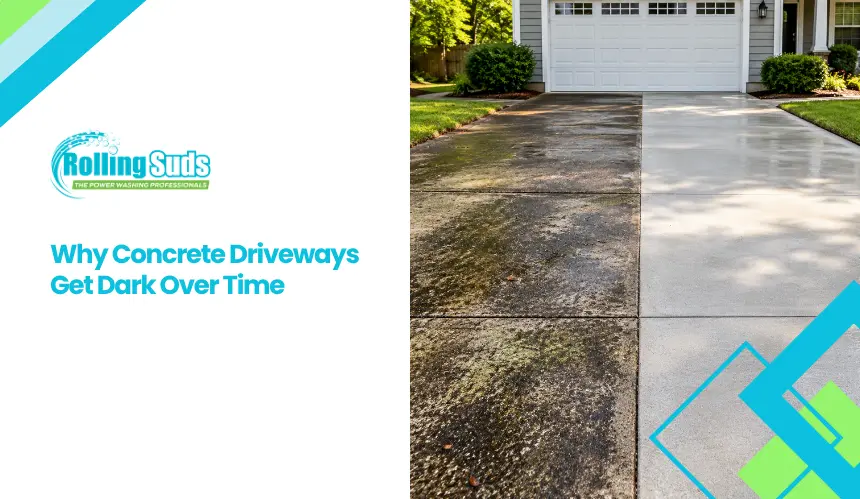
Why Concrete Driveways Get Dark Over Time
Quick Answer: Concrete driveways darken as their porous surfaces collect fine dirt, tire residue, oil, road grime, organic stains, and airborne pollutants. Moisture can deepen the discoloration by supporting algae or mildew and carrying contaminants farther into the concrete. |
A concrete driveway can look darker even after loose leaves and surface dust have been removed. Concrete contains pores, small pits, textured areas, and fine cracks that collect particles over time. Repeated vehicle traffic then presses this residue deeper into frequently used driving and parking sections.
Property owners considering driveway cleaning in Los Angeles may notice that discoloration is rarely caused by one substance. Dust, tire rubber, vehicle fluids, organic debris, airborne pollution, moisture, and surface wear can overlap, gradually changing the driveway from a lighter gray to an uneven brown, green, or nearly black appearance.
Concrete Absorbs Dirt Into Its Surface Pores
Concrete may appear completely solid, but its surface contains microscopic pores, shallow pits, and irregular textures that capture fine particles.
When dust and soil repeatedly settle, become wet, and are subjected to vehicle pressure, they can move beneath the exposed surface. This gradual accumulation makes the driveway look darker even after loose material has been swept away.
Fine Dust Settles Below the Surface Texture
Airborne dust, dry soil, pollen, and small particles land across the driveway throughout the day. While sweeping removes material resting on top, finer particles settle inside pores, exposed aggregate, and textured depressions.
Repeated moisture then carries this residue deeper into the surface, creating gray or brown discoloration that becomes more visible as accumulation continues.
Repeated Traffic Compacts Dirt
Vehicles and pedestrians repeatedly travel across the same entrance lanes, turning points, and parking positions. Tires and footwear press loose dirt into the concrete whenever they pass over these areas.
Over time, this compression concentrates residue within commonly used sections, causing them to appear noticeably darker than driveway areas that receive little regular traffic or pressure.
Dirt Collects in Small Cracks and Pits
Minor cracks, worn joints, chipped edges, surface pits, and exposed aggregate create recessed spaces where dirt can settle. These locations receive less contact during ordinary sweeping and rinsing, allowing residue to remain after surrounding areas appear clean.
Continued accumulation produces dark lines, spots, and irregular patches that emphasize existing imperfections across the concrete surface.
Ordinary Rinsing Leaves Embedded Residue Behind
A garden hose can move loose dust and debris across the driveway, but it may not dislodge particles held within concrete pores or within the compacted surface texture.
Once the water evaporates, the embedded residue remains and becomes visible again. This explains why a driveway can still appear gray, brown, or dark despite being rinsed regularly.
Vehicle Traffic Leaves Dark Marks
Concrete driveways are repeatedly exposed to tire contact, road residue, undercarriage dirt, and leaking vehicle fluids. Because vehicles usually follow the same path and stop in familiar positions, contaminants become concentrated in limited areas.
Entrance lanes, turning points, tire tracks, and parking spaces therefore darken faster than concrete that receives little direct vehicle contact.
Tires Transfer Rubber Residue
Vehicle tires warm through road contact and friction, then transfer small amounts of rubber, roadway oils, and embedded grime onto the concrete. Braking, accelerating, and turning increase friction on the driveway surface, creating darker marks in commonly used areas.
These deposits build gradually when vehicles repeat the same movements and parking patterns each day.
Parking Areas Receive Repeated Contact
The same driveway sections regularly support vehicle tires and weight for extended periods. Dirt carried in the tire tread is deposited and compressed whenever the vehicle arrives or departs.
Because parking positions receive more repeated contact than surrounding concrete, rectangular areas, parallel tracks, and individual tire locations may become noticeably darker than the rest of the driveway.
Oil and Vehicle Fluids Penetrate Concrete
Engine oil, transmission fluid, power steering fluid, coolant, and other automotive fluids can drip beneath parked vehicles. Unsealed, worn, or porous concrete absorbs these substances rather than holding them entirely on the surface.
The resulting stains may darken, spread outward, and attract additional dirt, creating concentrated patches that remain visible after loose grime is removed.
Important Information: The National Park Service explains that oil contamination can form a slick layer on concrete. Its cleaning guidance also emphasizes early treatment, suitable cleaning agents, contact time, agitation, and thorough rinsing rather than relying on water alone |
Road Grime Transfers From Vehicles
Tires, wheel wells, and lower vehicle surfaces collect soot, fine dust, oils, mud, and roadway particles during travel. When a vehicle enters the driveway, tire contact and dripping moisture transfer this mixture onto the concrete.
The greatest accumulation often appears near the street entrance, along regular tire paths, and beneath frequently parked vehicles.
Moisture Encourages Organic Discoloration
Moisture makes concrete look temporarily darker, but recurring dampness can also create conditions that support longer-lasting organic discoloration.
Shaded sections, low spots, driveway edges, and areas exposed to irrigation may dry slowly. When water combines with dirt and organic residue, algae or mildew can develop across the porous surface and deepen existing stains.
Shaded Areas Stay Damp Longer
Driveway sections beside walls, fences, trees, dense shrubs, or regularly parked vehicles receive less direct sunlight.
These areas dry more slowly after rain, irrigation, or washing. Prolonged moisture allows dust and organic material to remain attached to the concrete, causing shaded sections to appear darker and making them more suitable for biological growth.
Algae Can Form Green or Dark Films
Algae can develop where moisture, shade, and organic residue occur together consistently. It spreads through concrete pores, shallow pits, cracks, and textured sections, creating green, brown, or nearly black films.
The discoloration may appear more intense when wet because moisture temporarily deepens the concrete’s color and highlights the organic material attached to it.
Mildew Develops Where Airflow Is Limited
Concrete beside buildings, fences, retaining walls, or dense landscaping may receive limited sunlight and airflow. When these areas remain damp, mildew can develop on the dirt and organic residue covering the surface.
It may appear as scattered dark spots or larger irregular patches that contrast noticeably with exposed driveway sections that dry more quickly.
Irrigation Runoff Creates Repeated Wet Areas
Misaligned sprinklers, landscape overspray, and drainage from garden beds can wet the same driveway edge on a regular schedule. This water carries soil, fertilizer residue, and organic particles onto the concrete while slowing the drying process.
Repeated wetting and evaporation gradually create darker borders, streaks, and patches near lawns, planters, and landscaped slopes.
Organic Debris Leaves Stains Behind
Leaves, flowers, fruit, seeds, bark, and other plant matter can discolor a concrete driveway as they become wet and decompose.
Natural pigments and organic compounds move into the porous surface, especially when debris remains undisturbed for several days. Tires and foot traffic may crush the material, spreading concentrated residue across a wider area.
Leaves Release Natural Tannins
Wet leaves release tannins and other natural pigments as they begin to break down. These compounds can soak into porous concrete and leave brown, yellow, or nearly black outlines beneath leaf piles.
The stains become more noticeable when moisture repeatedly wets the same debris or when fallen leaves remain on the driveway for extended periods.
Fruit and Seeds Create Concentrated Marks
Fallen berries, fruit, seed pods, and flowers contain moisture, sugars, and strongly colored natural compounds. When crushed by tires or footwear, they spread across the concrete and enter small pores and pits.
These concentrated marks often appear beneath overhanging trees or near landscaped areas where seasonal plant material regularly falls onto the driveway.
Soil Washes Onto Driveway Edges
Rainfall, irrigation, and landscape runoff can carry soil from lawns, planters, slopes, and garden beds onto nearby driveway edges. Fine particles settle into the concrete texture as the water evaporates, leaving brown or gray borders.
Repeated runoff follows similar routes, gradually widening the stains and making affected areas look consistently darker.
Runoff Fact: Alabama Cooperative Extension states that runoff from hard surfaces may carry loose soil, motor oil, metals, and other pollutants. This explains why repeated irrigation or rainfall can deposit mixed contaminants along driveway edges and established water-flow paths. |
Decomposing Debris Darkens Textured Concrete
Plant material trapped inside cracks, joints, exposed aggregate, and low spots can remain damp longer than debris on open surfaces. As it decomposes, it releases pigments and dark organic residue into the surrounding concrete.
Textured areas hold this material more securely, allowing discoloration to deepen between routine sweeping or ordinary driveway rinsing.
Airborne Contaminants Accumulate Gradually
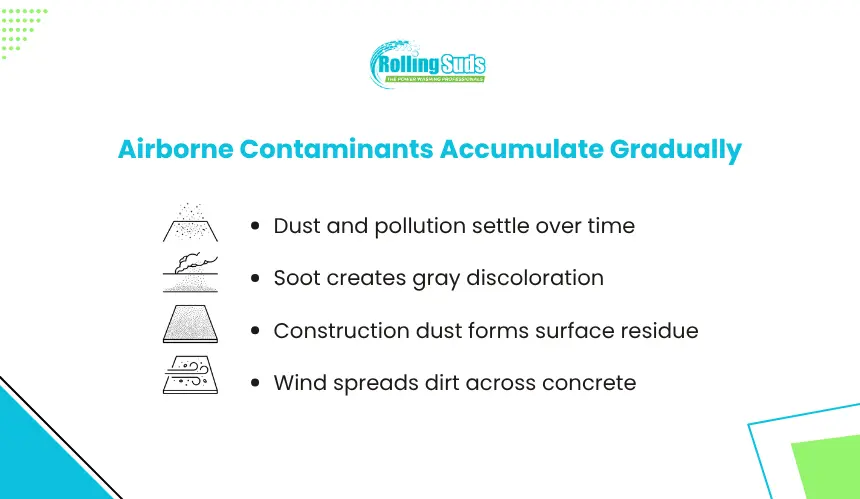
Driveways remain exposed to traffic emissions, windblown dust, soot, pollen, and nearby construction activity throughout the year. These fine contaminants settle across the concrete and enter its porous texture.
When mixed with rain, irrigation water, or vehicle moisture, they form a darker residue that becomes increasingly difficult to remove through sweeping or ordinary rinsing.
Traffic Pollution Settles on Exposed Concrete
Vehicles release and redistribute fine particles from exhaust, brake wear, tires, and roadway dust. Air movement carries this material onto nearby driveways, particularly properties close to busy streets or intersections.
Once deposited, moisture draws the particles into surface pores, creating a gray or black discoloration that develops gradually rather than appearing as a single, defined stain.
Soot Creates Gray or Black Discoloration
Soot consists of extremely fine dark particles that can settle across exposed concrete from vehicle emissions, outdoor combustion, and surrounding urban activity.
The particles collect within shallow pits and textured areas, where routine sweeping may not reach them. As deposits increase, the driveway may develop a dull gray appearance or uneven areas of darker staining.
Construction Dust Mixes With Moisture
Construction, renovation, demolition, and landscaping work can release cement dust, soil, and other fine particles into the surrounding air.
Once this material lands on a driveway, moisture can turn it into a thin residue that settles into the surface texture. Repeated drying leaves behind dull patches, streaks, or darker sections near active work areas.
Wind Redistributes Dirt Across the Driveway
Wind carries dry soil, dust, pollen, and small pieces of organic material from streets, yards, and nearby properties.
Driveway edges, expansion joints, low areas, and sections beside walls often collect the greatest amount. When traffic presses this redistributed material into the concrete, the temporary surface dust gradually becomes a deeper, more persistent discoloration.
Surface Age and Wear Make Darkening More Visible
As concrete ages, exposure to vehicles, weather, moisture, cleaning, and daily use can change its surface texture and appearance. Small pits, worn finishes, weakened sealers, and repaired areas may absorb contaminants at different rates.
This uneven absorption causes some sections to retain more dirt, moisture, oil, and organic residue, making gradual darkening increasingly noticeable.
Weathering Increases Surface Texture
Sunlight, rainfall, temperature changes, abrasion, and repeated use gradually weather the upper concrete surface.
As smoother areas become rougher or more porous, they provide additional spaces for dust, grime, and moisture to collect. Contaminants held in these irregularities can make older concrete look darker and less uniform than newer or less-exposed sections.
Worn Sealers Create Uneven Absorption
A concrete sealer can reduce the amount of moisture and staining material absorbed by the surface. As the coating wears from tire contact, sunlight, weather, and routine use, exposed sections begin absorbing contaminants more readily.
The driveway may then develop uneven dark patches where the remaining sealer and worn areas provide different levels of protection.
Repairs and Patches Age Differently
Patched cracks, resurfaced sections, replaced slabs, and spot repairs may contain materials with different colors, textures, and absorption rates.
These areas also weather at a different pace from the surrounding concrete. As dirt and moisture accumulate, the contrast between the original surface and repaired sections may become more pronounced, resulting in an unevenly darkened appearance.
Frequently Used Areas Darken Faster
Entrance lanes, turning points, walking routes, and regular parking positions experience more friction and contaminant transfer than unused driveway sections.
Tires and footwear repeatedly press dirt into the same surface areas, while vehicle fluids may collect beneath parked cars. This concentrated exposure causes high-traffic zones to darken faster than the surrounding concrete.
Los Angeles Conditions Can Accelerate Driveway Darkening
Los Angeles driveways may experience prolonged dust accumulation during dry weather, frequent vehicle residue, irrigation overspray, and localized shade from buildings or landscaping. These conditions can occur together across the same property.
Dust settles during dry periods, while occasional moisture carries it into concrete pores and supports darker staining along repeatedly damp or heavily traveled areas.
Long Dry Periods Allow Dust to Build Up
Extended periods without rainfall allow road dust, pollen, soil, soot, and other airborne particles to remain on exposed driveways.
Additional layers accumulate before natural rainfall can move loose material away. When rain or irrigation eventually wets the concrete, moisture can carry the collected residue into pores, textured sections, cracks, and joints, intensifying existing discoloration.
Vehicle Activity Adds Road Residue
Regular driving throughout Los Angeles exposes tires and lower vehicle surfaces to roadway dust, rubber particles, oils, and fine urban grime.
Vehicles transfer this mixture onto residential concrete when entering, turning, or parking. Properties with several vehicles or frequent arrivals may develop darker tire paths and parking areas more quickly than lightly used driveways.
Irrigation Creates Localized Moisture
Because rainfall may be limited for long periods, landscape irrigation often becomes a recurring source of driveway moisture.
Sprinkler overspray and runoff from lawns or planters can repeatedly wet the same concrete edges. Water also carries soil and organic material across the surface, creating dark borders or streaks where moisture follows a consistent route.
Shade and Landscaping Affect Discoloration
Walls, fences, trees, shrubs, and neighboring structures can shade portions of a driveway for much of the day.
These sections dry more slowly after irrigation, washing, or rainfall. Nearby landscaping also contributes leaves, pollen, soil, flowers, and fruit, causing shaded edges to develop darker organic stains than exposed areas receiving stronger sunlight.
Need help removing embedded grime, tire residue, organic stains, and uneven discoloration? Pressure washing in Los Angeles, powered by Rolling Suds of Beverly Hills, provides professional driveway cleaning for concrete surfaces throughout the city.
Frequently Asked Questions
Why does a concrete driveway turn black?
A concrete driveway may turn black because its porous surface collects soot, tire residue, oil, compacted dirt, mildew, algae, and decomposing organic material. Moisture can carry these contaminants deeper into pores and textured areas. The discoloration is usually darkest along shaded sections, vehicle paths, parking positions, cracks, and areas exposed to recurring runoff.
Why are tire marks darker near parking areas?
Parking areas receive repeated contact from warm tires carrying rubber particles, road grime, oils, and embedded dirt. Vehicle weight presses this residue into the concrete whenever the car arrives or leaves. Braking, turning, and remaining in the same position concentrate the deposits, so individual tire locations become darker than surrounding, less frequently used sections.
Can moisture make concrete look darker?
Yes. Water temporarily deepens the natural color of concrete by changing how light reflects from its surface. Recurring moisture can also transport fine dirt into pores and support algae or mildew where drying is slow. Consequently, shaded areas, low spots, irrigation paths, and driveway edges may retain darker discoloration even after visible water evaporates.
Why do leaves stain concrete driveways?
Wet leaves release tannins, pigments, and organic compounds as they decompose. Porous concrete absorbs this colored residue, especially when leaf piles remain in place during damp weather. Tires and foot traffic may crush the material and spread it farther. The resulting stains often appear as brown outlines, irregular dark patches, or concentrated marks beneath trees.
Does older concrete darken faster?
Older concrete may darken more noticeably when weathering, abrasion, small cracks, and worn sealers increase its ability to retain contaminants. Rough or unprotected sections can absorb more dirt, oil, moisture, and organic residue than smoother areas. However, exposure conditions and maintenance history also determine how quickly discoloration develops across an aging driveway.