
- rolling suds
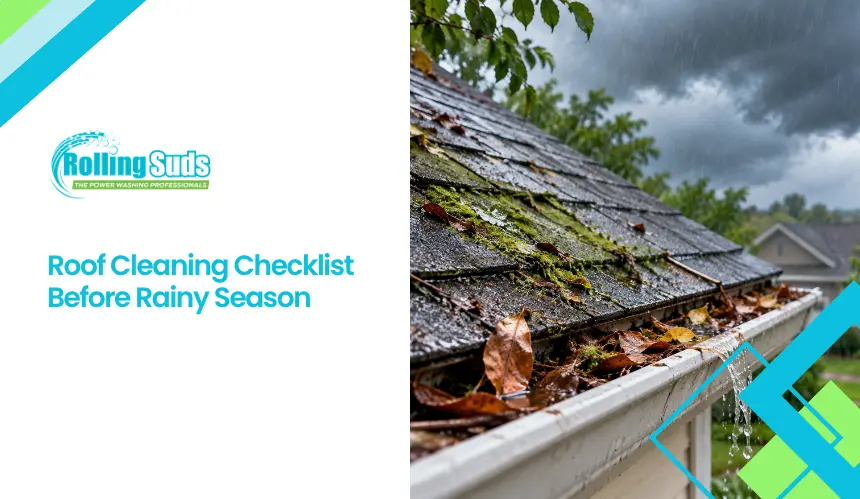
Roof Cleaning Checklist Before Rainy Season
Quick Answer: Before the rainy season, roof cleaning should include checking for damaged or displaced materials, removing loose debris, treating algae and moss, clearing valleys and tile channels, and confirming that gutters and downspouts can carry runoff. Surrounding landscaping and exterior features should also be protected while cleaning solution, loosened residue, and rinse water move through the roof’s drainage system. |
Rain can move loose leaves, dust, twigs, seeds, and organic residue into roof valleys, gutters, downspouts, and drainage outlets. If these routes are already restricted, additional rainfall may cause water to collect, overflow, or flow across areas not designed to handle concentrated runoff.
Completing roof cleaning in Los Angeles before the rainy season helps address debris that may accumulate during extended dry periods. The process should cover more than visible roof surfaces. It must also include material inspection, contamination treatment, drainage clearing, property protection, and a final review of how water will move from the roof to the ground.
Checklist Item | What to Review or Complete | Why It Matters Before Rain |
Inspect Roofing Materials | Check for cracked tiles, lifted shingles, loose components, worn coatings, and exposed fasteners. | Cleaning and rainfall may affect already vulnerable areas. |
Review Roof Transitions | Inspect flashing, edges, vents, skylights, chimneys, pipes, and repaired sections. | Debris and water may collect around seams and penetrations. |
Locate Contamination | Identify algae, moss, lichen, grime, and shaded areas with heavier buildup. | Different areas may require adjusted coverage and contact time. |
Remove Loose Debris | Clear leaves, twigs, seeds, dust, and decomposing organic material. | Loose material can move into drainage routes during rain. |
Clear Valleys and Channels | Open roof valleys, tile channels, and routes around raised roof features. | These areas direct water toward gutters and lower drainage points. |
Apply Cleaning Solution | Use a roof-compatible product across contaminated areas. | Attached growth may not be removed through debris clearing alone. |
Allow Contact Time | Keep the solution on the surface for the required treatment period. | Adequate contact time reduces the need for excessive water impact. |
Inspect the Roof Before Cleaning Begins
A pre-cleaning inspection identifies conditions that could affect worker movement, the application of cleaning solutions, and the direction of water. The roof should be reviewed from accessible vantage points before equipment is positioned. Material type, slope, visible deterioration, drainage layout, and contamination level help determine which areas can be cleaned normally and which require reduced impact or separate roofing attention.
Identify Cracked or Displaced Roofing Materials
Cracked tiles, lifted shingles, loose ridge pieces, exposed fasteners, and displaced roofing sections should be documented before cleaning begins. Applying water under these conditions without adjustment may disturb the material further or allow moisture to enter vulnerable areas.
The cleaning plan should identify where access, solution application, and rinsing require additional control.
Check Flashing, Edges, and Roof Penetrations
Flashing, roof edges, vents, skylights, chimneys, pipes, and other penetrations create transitions where debris and moisture can collect. The inspection should identify open seams, deteriorated sealant, corrosion, or loose components.
Cleaning around these features requires careful water direction so runoff follows the roofing surface rather than entering gaps or openings.
Locate Areas With Heavy Contamination
Shaded sections, areas beneath trees, north-facing slopes, valleys, and locations near slow drainage may contain heavier algae, moss, grime, or debris.
Marking these areas helps determine where additional solution coverage or contact time may be needed. It also prevents the cleaner from treating every roof section with the same intensity.
Plan Safe Roof Access and Equipment Placement
Roof height, pitch, surface condition, nearby power lines, landscaping, and available ground space affect how the work area can be accessed. Equipment should be positioned so as not to block entrances or damage surrounding features.
Fragile roof sections may require alternative access methods that reduce direct foot traffic across tiles, shingles, or repaired areas.
Remove Loose Debris From the Roof Surface
Loose debris should be cleared before applying cleaning solution or rinse water. Leaves, twigs, seeds, dust, and decomposing organic material can block channels, absorb cleaning products, and move suddenly when exposed to water.
Removing this material first reveals the roof surface underneath and reduces the amount of debris entering gutters and downspouts during cleaning.
Clear Leaves, Twigs, and Seeds
Leaves, twigs, seed pods, and windblown material commonly settle behind raised tiles, roof features, and changes in slope. These accumulations can retain moisture and hide contamination underneath.
Debris should be lifted or moved carefully without abrasive scraping that could damage coatings, loosen granules, or disturb weathered roofing components.
Open Roof Valleys and Tile Channels
Roof valleys and tile channels direct water toward gutters and lower drainage points. Packed debris in these routes can restrict runoff and cause water to spread sideways during rain.
Clearing them before washing allows both rinse water and seasonal rainfall to follow the roof’s intended drainage pattern without carrying compacted material farther downstream.
Remove Debris Around Vents and Other Features
Organic material often collects behind vents, chimneys, skylights, pipes, solar mounting points, and other raised roof features. These areas should be checked individually because buildup may remain hidden from ground-level inspection.
Careful removal keeps debris from holding moisture against roof transitions or entering nearby drainage routes during rainfall.
Collect Dislodged Material Before It Reaches Drains
Debris removed from the roof should be collected whenever practical rather than pushed directly into gutters or downspouts. Large amounts of loosened material can create new blockages farther along the drainage system.
Catching leaves, twigs, moss, and sediment reduces the load placed on gutters, outlets, and ground-level drains during cleaning.
Treat Attached Algae, Moss, and Grime
After loose debris is removed, attached contamination can be treated directly. Algae, moss, lichen, grime, and compacted residue may remain bonded to textured roofing materials and shaded sections. The cleaning method should rely on a compatible solution, even application, suitable contact time, and controlled rinsing rather than excessive pressure that could disturb the roof surface.
Select a Roof-Compatible Cleaning Solution
The cleaning solution should match the roofing material, protective finish, contamination type, and manufacturer-related maintenance guidance. A product suitable for concrete pavement may be inappropriate for asphalt shingles, clay tiles, coated metal, or glazed roofing.
Correct selection helps loosen attached growth while limiting unnecessary effects on the roof and surrounding property.
Apply the Solution Across Contaminated Areas
The solution should cover visible growth and the adjoining roof surface so isolated untreated patches do not remain between cleaned areas. Application must follow the roof profile, including raised faces, overlaps, channels, and textured sections.
Consistent coverage helps the product reach areas of contamination that mechanical surface-washing equipment cannot contact evenly.
Allow Sufficient Contact Time
The cleaning solution needs time to wet, soften, and release the attached organic material. Rinsing too soon may leave moss, algae, or grime bonded to the surface. Temperature, sunlight, roof material, and contamination density affect how quickly treated areas dry, so the cleaner must monitor conditions and prevent premature drying when required.
Use Controlled Rinsing to Release Residue
Once contamination has loosened, rinse water should move downward along the roofing courses and established drainage paths. The water impact must be appropriate for the material and existing condition.
Controlled rinsing carries loosened residue toward collection points without forcing water upward beneath tiles, shingles, flashing, or overlapping roof components.
Clear the Roof Drainage System
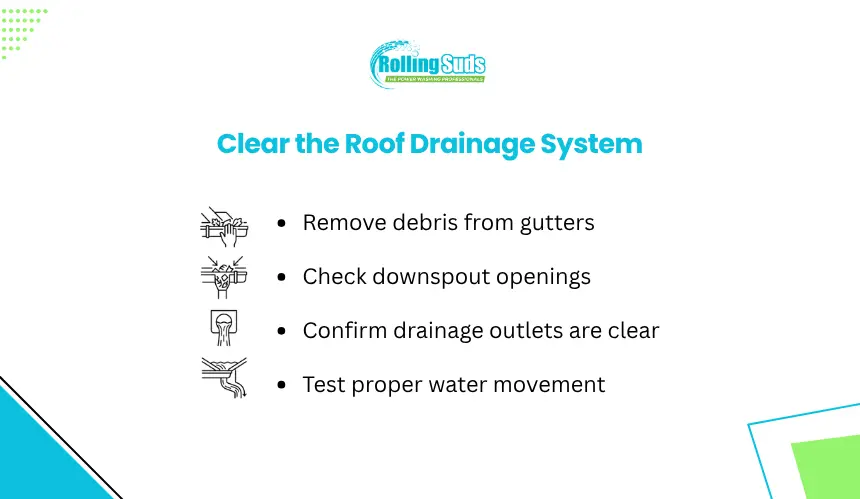
A clean roof surface cannot manage rain effectively if gutters, downspouts, or drainage outlets remain blocked. Each component should be cleared after loose debris and contamination are removed. This step confirms that rinse water and seasonal rainfall can travel from the roof toward the ground without backing up, overflowing, or carrying trapped material into a narrower section of the system.
Remove Material From Gutters
Gutters can collect leaves, twigs, roofing sediment, moss fragments, and residue released during cleaning. This material reduces the available space for rainwater and may create blockages around outlets.
Gutters should be cleared along their full length rather than only near visible clogs, since compacted debris may remain beneath loose surface material.
Check Downspout Openings
The opening where a gutter connects to a downspout is especially vulnerable to blockage because debris is concentrated at a smaller exit point. Leaves and moss may cover the opening even when the surrounding gutter appears clear. The connection should be inspected and cleared before testing water flow through the downspout.
Confirm That Drainage Outlets Are Clear
Downspouts may empty into splash blocks, extensions, surface drains, or underground drainage connections. Each outlet should be checked for visible obstruction and positioned to move water away from the building.
Clearing the roof and gutters without checking the final discharge point may simply transfer the blockage farther down the drainage route.
Drainage Preparation Fact: The U.S. government’s Ready.gov flood guidance advises property owners to clear drains and gutters before flood conditions. This supports checking the entire runoff route before rainy weather rather than cleaning only the visible roof surface. |
Test the Direction of Water Flow
A controlled water-flow test can reveal slow drainage, standing water, gutter overflow, leaking connections, or downspouts that discharge incorrectly. Water should move continuously from the roof into the gutter and through the outlet.
Any unexpected pooling or overflow should be investigated before seasonal rain places greater demand on the drainage system.
Protect the Property During Roof Cleaning
Roof-cleaning water, loosened residue, and treatment solution can travel beyond the roof through gutters, downspouts, wind, and surface runoff.
Before cleaning begins, the areas below the roofline should be reviewed for sensitive plants, vehicles, furniture, painted finishes, and drainage features. Protection must remain in place throughout the entire cleaning process.
Cover or Wet Sensitive Landscaping
Plants beneath roof edges and downspout outlets may receive concentrated runoff during application and rinsing. Sensitive landscaping should be identified before work begins and protected using appropriate coverings, controlled pre-wetting, or active rinsing.
Covers should not trap heat around plants, and runoff should be monitored so solution does not collect in landscaped areas.
Move Furniture and Vehicles From Runoff Areas
Patio furniture, grills, decorations, bicycles, and parked vehicles should be moved away from roof edges and downspout discharge points. Relocation protects these items from cleaning solution, dirty rinse water, moss fragments, and falling debris.
It also creates clearer ground access for equipment and allows workers to monitor runoff without unnecessary obstructions.
Protect Walls, Windows, and Outdoor Features
Exterior walls, windows, doors, lighting, awnings, and decorative features may sit directly beneath contaminated roof sections. These surfaces should be closed, covered, or rinsed as appropriate for their materials.
Monitoring them during cleaning prevents loosened grime or treatment solution from drying on finishes before it can be removed safely.
Monitor Cleaning Solution and Debris Runoff
Runoff should be observed from the roof surface through gutters and downspouts, and at ground-level discharge areas. The cleaner must watch for overflow, concentrated solution, displaced debris, or water moving toward sensitive locations.
Active monitoring allows protection and rinsing measures to be adjusted before residue accumulates or reaches unintended areas.
Complete a Final Pre-Rain Inspection
After cleaning and drainage clearing are complete, the roof should be reviewed before equipment and protective materials are removed. This inspection confirms that loosened contamination, cleaning residue, and debris have not been left behind.
It also verifies that water can move through the roof drainage system and identifies damaged areas that require separate roofing attention before heavier rain arrives.
Check That No Debris Remains
Roof valleys, tile channels, gutters, areas behind vents, and spaces around other raised features should be checked for remaining leaves, twigs, moss, or sediment. Material displaced during rinsing may collect elsewhere rather than leaving the roof completely.
A final visual review helps prevent these smaller accumulations from becoming drainage blockages.
Confirm Gutters and Downspouts Are Flowing
A final controlled flow test should confirm that water enters the gutters, reaches each downspout, and exits at the intended discharge point. Slow movement, standing water, joint leakage, or overflow may indicate a remaining obstruction or alignment problem.
These conditions should be identified before rainy weather increases the volume moving through the system.
Review Areas That Received Reduced Water Impact
Weathered tiles, repaired sections, loose materials, and vulnerable roof transitions may have received lighter rinsing to avoid damage. These areas should be checked for remaining solution or residue. If further treatment is needed, it should use the same controlled approach rather than increasing pressure around materials already identified as sensitive.
Document Damage That Requires Roofing Attention
Cleaning can expose cracked tiles, lifted shingles, deteriorated flashing, open seams, or other conditions previously hidden by debris and contamination. These findings should be documented and referred to a qualified roofing professional when appropriate.
Roof cleaning removes buildup but does not repair structural defects, leaks, or damaged roofing components. Los Angeles properties can collect dust, leaves, seeds, and organic residue during extended dry periods. Addressing this buildup before seasonal rainfall helps keep roof valleys, gutters, downspouts, and drainage outlets clear when runoff increases.
Ready to prepare the roof and drainage system before rainy weather? Pressure washing in Los Angeles, powered by Rolling Suds of Beverly Hills, provides professional roof cleaning for Los Angeles properties, including debris removal, contamination treatment, and controlled rinsing.
Frequently Asked Questions
When should a roof be cleaned before the rainy season?
Roof cleaning should be scheduled early enough to allow the surface, gutters, downspouts, and discharge areas to be inspected before sustained rain begins. Waiting until a storm is approaching may limit safe access and drying time. The appropriate schedule depends on current weather, roof condition, debris levels, and service availability.
Why should roof debris be removed before rain?
Leaves, twigs, seeds, moss, and compacted organic material can move into valleys, gutters, and downspout openings when rain begins. These materials may restrict water flow, hold moisture against the roof, or contribute to overflow. Removing them beforehand reduces the amount of loose material entering the drainage system during rainfall.
Should gutters be cleared during roof cleaning?
Yes. Gutters receive debris, sediment, treatment residue, and loosened contamination from the roof surface. Cleaning only the visible roofing material can leave the drainage system restricted. Gutters, downspout openings, and discharge points should be checked to ensure water can travel through the entire drainage route rather than collecting at an obstruction.
Can moss and algae be left until after the rainy season?
Leaving moss and algae untreated may allow moisture-retaining growth and attached residue to remain through wet weather. Their effect depends on the roof material, growth level, and existing condition. Treatment before the rainy season helps clear contaminated sections while allowing drainage routes and the underlying roofing surface to be inspected more completely.
Does every roof require the same cleaning checklist?
No. Tile, shingle, metal, glazed, and coated roofs have different profiles and sensitivities. Roof age, slope, drainage design, contamination, nearby landscaping, and existing damage also affect the process. The checklist categories remain useful, but the solution, access method, contact time, and rinsing approach should be adjusted for each roof.