
- rolling suds
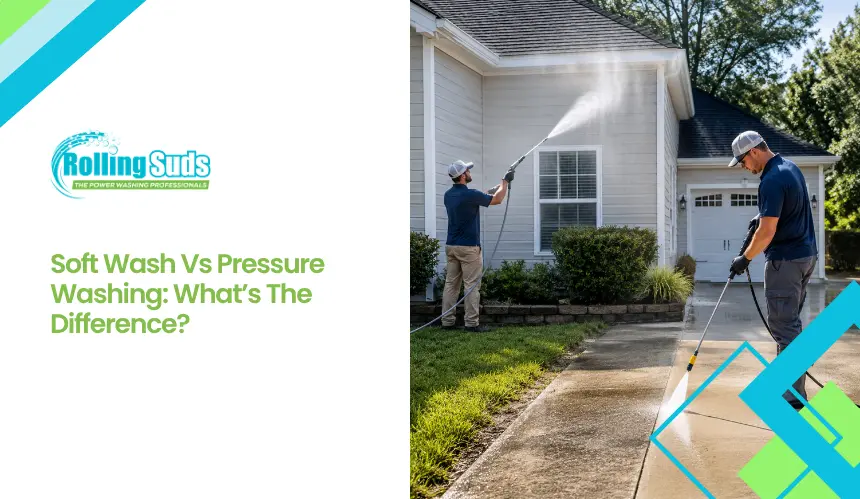
Soft Wash Vs Pressure Washing: What’s The Difference?
A Quick Answer: Soft washing and pressure washing are two different exterior cleaning methods that differ in how they remove contaminants. Soft washing uses low-pressure water combined with specialized cleaning solutions to break down mold, algae, and bacteria, while pressure washing relies on high-pressure water (PSI and GPM) to physically remove dirt and buildup.
A 2025 exterior maintenance study found that soft washing can prevent organic regrowth for longer periods compared to pressure-only methods, making it more effective for surfaces affected by mold and algae. |
At first glance, soft washing and pressure washing may seem like interchangeable methods for cleaning exterior surfaces. Both use water to remove dirt and buildup, but the way they achieve results is fundamentally different. This distinction becomes critical when dealing with surfaces that can either withstand high pressure or require a more controlled, low-impact approach.
Many property owners assume that higher pressure automatically means better cleaning. However, this assumption often leads to surface damage, especially on materials like roofing, painted siding, or wood. A 2025 exterior care study found that a significant percentage of surface damage cases are linked to improper use of high-pressure systems on delicate materials. In contrast, low-pressure chemical-based cleaning methods have been shown to deliver longer-lasting results when dealing with organic growth such as mold and algae.
Soft washing focuses on breaking down contaminants at a microscopic level using cleaning solutions, while pressure washing relies on physical force to remove visible buildup. Each method serves a specific purpose, and choosing the wrong one can reduce effectiveness or shorten the lifespan of exterior surfaces.
Understanding how these two methods differ helps property owners apply the right technique for each surface, improving cleaning outcomes while protecting long-term structural integrity.
What Is Soft Washing And How Does It Work?
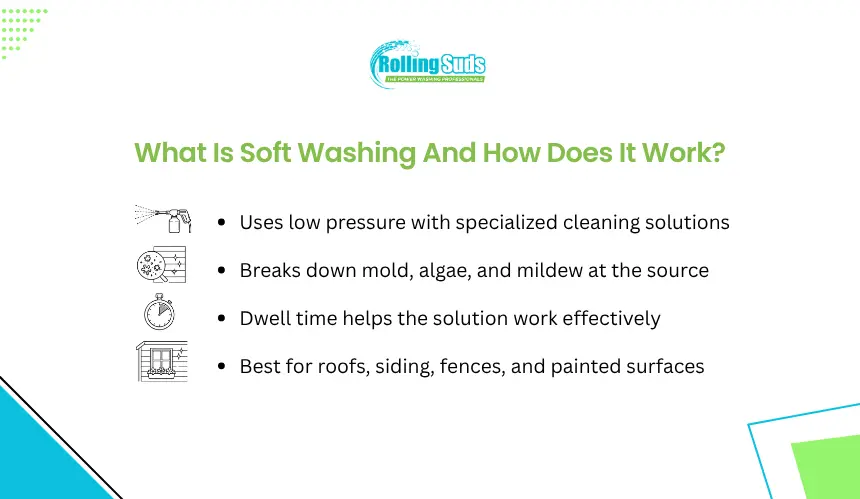
Soft washing is a low-pressure cleaning method designed to remove organic growth and contaminants without using pressure. Instead of using high PSI, it combines gentle water flow with specialized cleaning solutions that break down mold, algae, mildew, and bacteria at their root level.
Low-Pressure Cleaning Mechanism Explained
Soft washing operates at significantly lower pressure than standard pressure washing. The goal is not to blast contaminants off the surface, but to apply a controlled stream that allows cleaning agents to do the work.
This method reduces the risk of surface damage, especially on materials that can be weakened or stripped by high-pressure water. The cleaning process focuses on chemical action rather than mechanical force, making it safer for sensitive exterior components.
Role Of Cleaning Solutions And Dwell Time
The effectiveness of soft washing depends heavily on the type of cleaning solution used and the time it remains on the surface. These solutions are formulated to penetrate and break down organic matter, allowing it to be rinsed away easily.
A 2025 cleaning systems study found that allowing proper dwell time can improve the removal of biological growth by over 40% compared to immediate rinsing. This highlights why soft washing is not just about application, but also about timing and controlled execution.
Surfaces Commonly Cleaned With Soft Washing
Soft washing is primarily used on surfaces that cannot tolerate high pressure but still require deep cleaning. It is especially effective for areas affected by moisture and biological buildup.
Common applications include roofing materials, vinyl siding, painted surfaces, fences, and other exterior elements where preserving structural integrity is critical. By targeting contaminants at their source, soft washing delivers longer-lasting results without compromising the surface.
What Is Pressure Washing And How Does It Work?
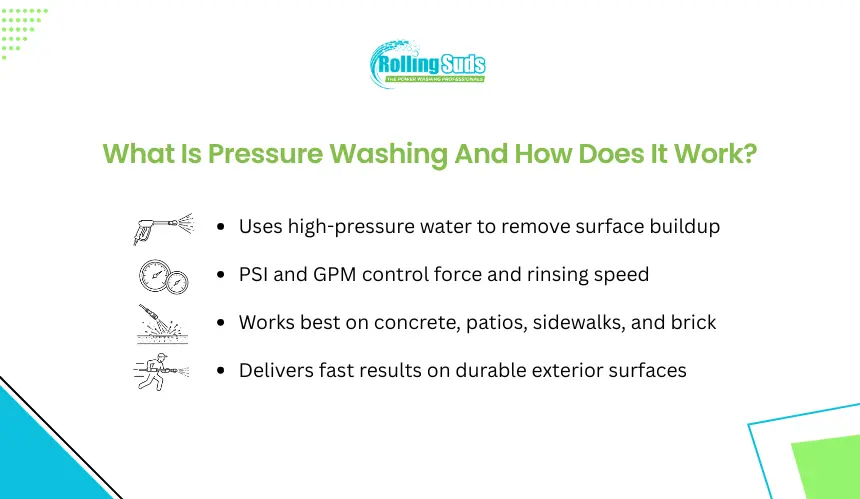
Pressure washing is a high-impact cleaning method that uses pressurized water to physically remove dirt, grime, and surface contaminants. Unlike soft washing, which relies on chemical breakdown, pressure washing depends on controlled force to dislodge buildup from durable surfaces.
High-Pressure Cleaning Mechanism
Pressure washing works by forcing water through a narrow nozzle at high velocity, creating a concentrated stream that breaks the bond between contaminants and the surface. The effectiveness of this method depends on how pressure is applied, including spray angle, distance, and consistency of movement.
This approach is particularly useful for removing compacted dirt, mud, and surface stains that do not require chemical treatment. When used correctly, it delivers fast and visible cleaning results.
Role Of PSI, GPM, And Water Force
The performance of pressure washing is determined by the balance between PSI and GPM. PSI controls the spray intensity, while GPM determines how efficiently contaminants are rinsed away.
Higher PSI increases impact force, making it effective for stubborn buildup, while higher GPM improves coverage and reduces cleaning time. A 2025 equipment performance study showed that optimizing both factors can improve cleaning efficiency by up to 30% without increasing the risk of surface damage.
Surfaces Suited For Pressure Washing
Pressure washing is best suited for hard, non-porous surfaces that can withstand direct force. These include concrete driveways, sidewalks, patios, and certain types of stone or brick.
It is also used on durable exterior structures to remove surface-level contaminants quickly. However, proper control is essential, as excessive pressure or incorrect technique can still damage even strong materials over time.
Soft Wash Vs Pressure Washing: Key Differences Explained
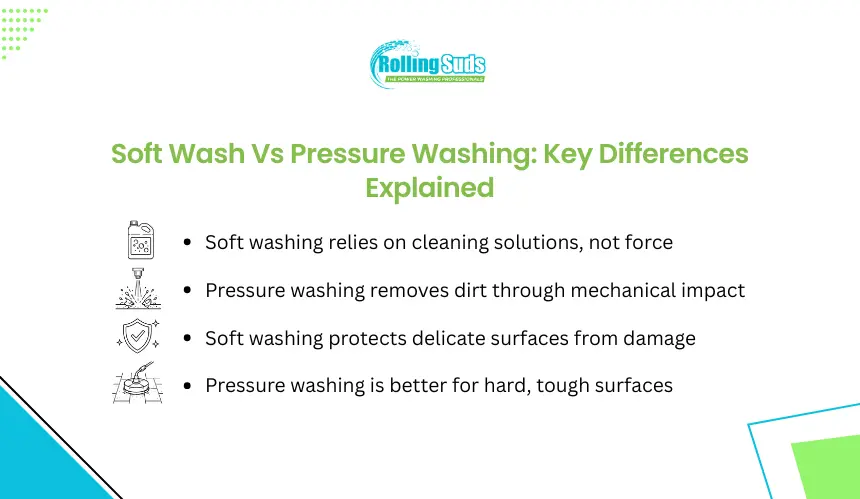
The difference between soft washing and pressure washing is not just about pressure levels. It is about how each method interacts with contaminants, surfaces, and long-term results. Understanding these differences helps determine which method delivers better outcomes for specific cleaning needs.
Pressure Vs Chemical Cleaning Approach
Soft washing relies on chemical solutions to break down organic growth at a molecular level, allowing contaminants to be rinsed away with minimal force. This approach targets the root cause of issues like mold and algae rather than just removing visible layers.
Pressure washing, on the other hand, uses mechanical force to dislodge dirt and debris from the surface. While effective for immediate visual cleaning, it may not fully eliminate underlying biological growth, leading to faster regrowth.
A 2025 exterior cleaning study found that chemical-assisted cleaning methods can extend the duration of cleanliness by reducing regrowth compared to pressure-only approaches.
Surface Safety And Risk Factors
Surface safety is one of the most critical differences between the two methods. Soft washing minimizes risk by using low pressure, making it suitable for delicate materials that can be damaged by high-impact water.
Pressure washing carries a higher risk when used incorrectly, especially on softer or coated surfaces. Excessive pressure can strip paint, weaken materials, and cause structural wear if not properly controlled.
Cleaning Effectiveness And Longevity
Both methods are effective, but they serve different purposes. Pressure washing delivers fast, visible results by removing surface-level contaminants, making it ideal for routine cleaning of durable surfaces.
Soft washing provides longer-lasting results by addressing the source of biological growth. By eliminating spores and bacteria, it reduces the likelihood of rapid regrowth, which is especially important for areas exposed to moisture and shade.
This difference in approach explains why soft washing is often preferred for maintenance of sensitive surfaces, while pressure washing is used for heavy-duty cleaning tasks where durability is not a concern.
When Should You Use Soft Washing Vs Pressure Washing?
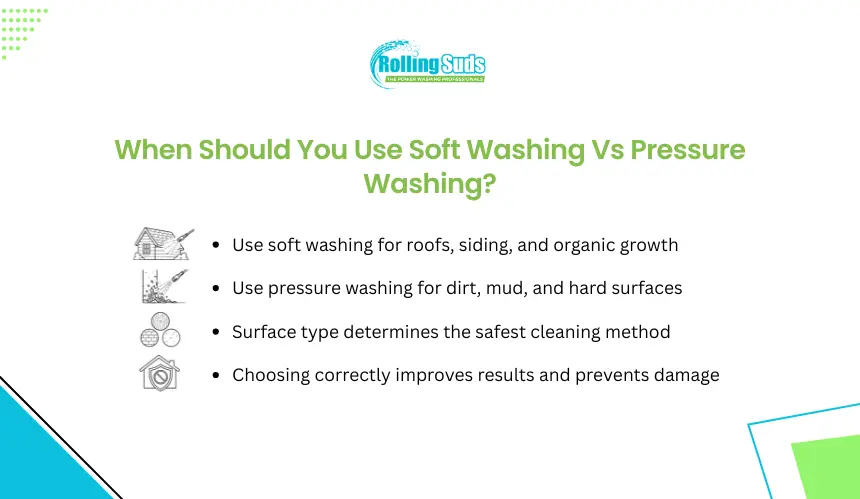
Choosing between soft washing and pressure washing depends on the surface type, level of contamination, and desired outcome. Each method is designed for specific conditions, and using the wrong approach can either reduce effectiveness or cause avoidable damage.
Best Use Cases For Soft Washing
Soft washing is most effective for organic growth, such as mold, algae, and mildew, especially on surfaces that cannot tolerate high pressure. It is commonly used for roofs, siding, painted exteriors, and fences, where preserving the material is critical.
A 2025 exterior maintenance study found that soft washing can reduce organic regrowth by up to 50% compared to pressure-only cleaning, making it the preferred method for long-term surface protection in moisture-prone environments.
Best Use Cases For Pressure Washing
Pressure washing is better suited for hard, non-porous surfaces that can handle high-impact water force. It is ideal for removing dirt, mud, and surface stains from driveways, sidewalks, patios, and other durable materials.
A 2025 equipment efficiency report showed that high-pressure cleaning can reduce cleaning time on large concrete surfaces by nearly 30%, making it a practical choice for fast and visible results in high-traffic areas.
Factors That Determine The Right Method
The decision ultimately depends on how the surface responds to pressure and the type of contaminants present. Surfaces exposed to biological growth benefit more from chemical-based soft washing, while surfaces with compacted dirt respond better to pressure washing.
Additional factors include the material’s age and condition, exposure to environmental elements, and whether the goal is short-term cleaning or long-term maintenance. Evaluating these variables ensures the selected method delivers optimal results without compromising surface integrity.
Common Misconceptions About Soft Washing and Pressure Washing
Misconceptions around these two methods often lead to incorrect choices, surface damage, or inefficient cleaning results. Clarifying these misunderstandings helps property owners select the right approach based on actual cleaning needs rather than assumptions.
Is Soft Washing Less Effective Than Pressure Washing?
Soft washing is often perceived as less effective because it uses low pressure, but this is inaccurate. Its effectiveness comes from chemical action rather than force. By breaking down contaminants at the root level, it can deliver deeper and longer-lasting results, especially for mold and algae.
A 2025 cleaning performance study found that chemical-based cleaning methods can maintain surface cleanliness for longer periods compared to pressure-only cleaning, particularly in humid environments where biological growth is common.
Can Pressure Washing Replace Soft Washing?
Pressure washing cannot fully replace soft washing in situations involving delicate surfaces or organic contamination. While it can quickly remove visible dirt, it may not eliminate underlying spores or bacteria, leading to faster regrowth.
This is why relying solely on pressure washing for surfaces like roofs or siding can result in repeated cleaning cycles rather than long-term solutions.
Are Both Methods Safe For All Surfaces?
Neither method is universally safe for every surface. Pressure washing can damage softer materials if used incorrectly, while soft washing requires proper chemical handling to avoid residue or surface reactions.
A 2025 property care report highlighted that incorrect method selection is a leading cause of preventable surface damage, underscoring the importance of matching the cleaning technique to the material and the type of contamination.
How To Choose The Right Cleaning Method For Your Property
Selecting between soft washing and pressure washing requires evaluating surface characteristics, contamination type, and the desired outcome. A structured approach helps property owners avoid damage and achieve more consistent, long-lasting results.
Surface Type And Material Sensitivity
The first factor to consider is how the surface reacts to pressure. Hard, non-porous materials can tolerate higher force, while softer or coated surfaces require a more controlled approach.
- Concrete, stone, and brick typically handle high-pressure cleaning effectively
- Wood, painted surfaces, and siding require lower pressure to prevent damage
- Roofing materials are highly sensitive and usually benefit from soft washing methods
A 2025 materials study found that improper pressure application on soft surfaces significantly increases the risk of structural wear and surface degradation.
Type Of Contamination And Buildup
Different contaminants respond differently to cleaning methods. Understanding what is present on the surface helps determine whether force or chemical action is more effective.
- Dirt, dust, and mud are typically removed using pressure washing
- Mold, algae, and mildew require soft washing to eliminate root-level growth
- Grease and oil buildup may require a combination of detergents and controlled pressure
Choosing the correct method ensures contaminants are removed efficiently rather than temporarily displaced.
DIY Vs Professional Cleaning Considerations
The complexity of the cleaning task often determines whether a property owner can handle it independently or should consider professional assistance.
- Small, accessible areas with minimal buildup are manageable for DIY cleaning
- Large surfaces or multi-material properties require more advanced coordination
- Delicate surfaces or persistent contamination benefit from professional techniques
A 2025 service efficiency report noted that professional cleaning methods can improve consistency and reduce repeat cleaning, especially for properties with mixed surface types and varying environmental exposure.
By evaluating these factors, property owners can select a cleaning method that balances effectiveness, safety, and long-term surface preservation.
Key Takeaways
Understanding the difference between soft washing and pressure washing helps property owners choose the right method for better results, surface safety, and long-term maintenance.
- Soft washing relies on low pressure and cleaning solutions to eliminate organic growth at the source
- Pressure washing uses high-pressure water to remove dirt and surface-level contaminants quickly
- Surface type determines which method is safe and effective
- Cleaning method selection directly impacts how long results last
Did You Know? Data from a 2025 cleaning efficiency analysis shows that combining the right method with proper technique can improve overall cleaning performance by up to 40%, while also reducing the need for frequent re-cleaning.
Rolling Suds provides professional exterior cleaning throughout Los Angeles and the surrounding areas, including Beverly Hills, Santa Monica, and Pasadena. Their team selects the right method for each surface, using soft washing for delicate materials and pressure washing for durable areas. By combining controlled pressure with proper cleaning solutions, they ensure effective, damage-free results that last longer and keep properties well-maintained.
Frequently Asked Questions
What is the main difference between soft washing and pressure washing?
The main difference lies in the approach to cleaning. Soft washing uses low pressure combined with cleaning solutions to break down organic growth, while pressure washing relies on high-pressure water to remove dirt and surface contaminants.
Which method lasts longer, soft washing or pressure washing?
Soft washing typically provides longer-lasting results because it removes contaminants at the root level, especially mold and algae. Pressure washing delivers immediate results but may not prevent quick regrowth in certain conditions.
Is soft washing safer for all surfaces?
Soft washing is safer for delicate surfaces like roofs, siding, and painted materials. However, proper chemical use is important to avoid residue or surface reactions, making correct application essential.
Can pressure washing damage surfaces?
Improper use of pressure washing, such as using high PSI or holding the spray too close, can damage surfaces. Correct technique and pressure control are necessary to prevent issues like etching or paint removal.
How do I know which method is right for my property?
The right method depends on surface type and contamination. Hard surfaces with dirt buildup benefit from pressure washing, while areas affected by mold or delicate materials require soft washing for safer and more effective cleaning.